Is dry shampoo bad for your hair? For most people, occasional use is safe, but it does not clean the scalp like washing with water and shampoo. Repeated use without regular washing can leave residue and may irritate some scalps.
Used sparingly, it can be a useful way to absorb excess oil and refresh the roots between wash days. The key is to treat it as a styling aid—not a replacement for cleansing your hair and scalp.
What is dry shampoo and how does it work?

Dry shampoo is a leave-in powder or spray that contains ingredients designed to absorb oil. It can make the roots look less greasy and add temporary texture or volume, but it does not remove dead skin cells, microorganisms or product residue in the way shampoo and water do.
Is dry shampoo bad for your hair or scalp?
For most people, occasional use is unlikely to be a problem. According to the American Academy of Dermatology, dry shampoo can be useful between washes, but applying too much can make hair feel dry, stiff or gritty and may irritate the scalp.
The concern is usually not that dry shampoo directly causes hair loss or permanently “clogs” every follicle. It is that residue can build up when the scalp is not washed regularly. Scratching an irritated scalp, or brushing brittle, product-coated hair roughly, may contribute to breakage or shedding.
Build-up and irritation
Powder, oil, dead skin and styling products can accumulate at the roots. If you notice itching, burning, tenderness or persistent flaking, stop using the product and wash it out. Seek professional advice if symptoms do not settle or if you develop marked redness, sores or patchy hair loss.
Dryness and breakage
Dry shampoo absorbs oil, so over-application can leave some hair types feeling rough or dry. Concentrate a small amount only where the roots look oily and avoid repeatedly coating the lengths.
How often should you use dry shampoo?
There is no universal schedule because hair type, scalp condition and product formula differ. Dermatologists quoted by the American Academy of Dermatology recommend washing with shampoo and water after one or two dry-shampoo applications.
Follow the directions on your product, apply a little at a time and continue your normal wash routine. If you have eczema, psoriasis, seborrhoeic dermatitis or another scalp condition, ask a dermatologist or trichologist whether dry shampoo is suitable for you.
How long does dry shampoo last?
The visible oil-control effect often lasts until the next day, but it varies by formula, hair type, activity and the amount used. Reapply sparingly rather than layering it heavily for several days.
Dry shampoo itself does not “expire” on the hair at a precise time. Once the roots look oily again, or the scalp feels coated or uncomfortable, it is time to wash rather than add more product.
How to use dry shampoo safely
- Use it only on dry hair and follow the label directions.
- Apply a small amount to oily areas of the roots rather than the whole head.
- Allow it to sit for the recommended time, then distribute or brush it through gently.
- Avoid inhaling spray or powder and keep it away from the eyes.
- Wash the scalp regularly with shampoo and water to remove residue.
- Stop if you develop itching, burning or another sign of irritation.
A non-aerosol option: Peptide Puff™
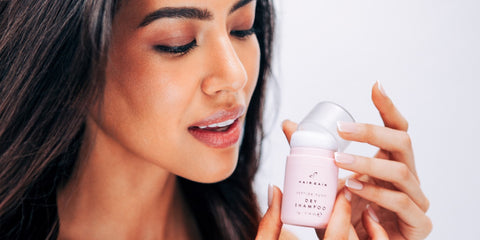
Hair Gain’s Peptide Puff™ Dry Shampoo is a non-aerosol powder with a padded applicator, designed to place product where it is needed at the roots. It absorbs excess oil and can add temporary volume and texture between washes.
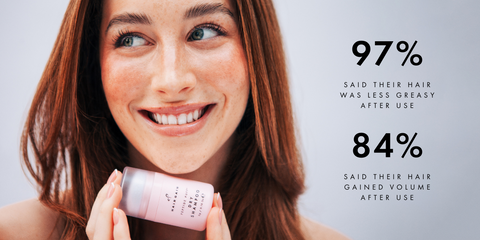
In an independent consumer-perception survey of 63 women using the product in February 2024, 88% said their hair felt instantly refreshed and 97% reported no irritation or itchiness. These are subjective survey results, not proof that the product treats a scalp condition or prevents hair loss.
Frequently asked questions
Does dry shampoo clean your hair?
No. It absorbs oil and can make hair look fresher, but shampoo and water are needed to cleanse the scalp and remove residue.
Can dry shampoo cause hair loss?
There is not good evidence that normal use directly causes permanent hair loss. However, overuse without washing may contribute to irritation, build-up, breakage or shedding. Speak to a GP or dermatologist about unexplained or persistent hair loss.
Can you sleep with dry shampoo in your hair?
Follow the product directions. Leaving it in overnight is common, but it should still be removed during your regular wash routine rather than layered repeatedly for several days.
Is aerosol or powder dry shampoo better?
Neither format is automatically best for everyone. Choose a product you can apply precisely and comfortably, and check the ingredients and directions if you have a sensitive scalp.
Is dry shampoo bad for your hair? Final thoughts
Dry shampoo is a convenient cosmetic refresher when used in moderation. Apply it sparingly, wash regularly and pay attention to how your scalp feels. If residue, itching or dryness develops, take a break and return to a gentle cleansing routine.
Read more
The Best Dry Shampoo for Effortlessly Clean-Looking Hair
*Data from an independent consumer-perception survey of 63 women using the Dry Shampoo, February 2024.
